The gap isn’t knowledge. It’s the game.
Too many promising tournament games are still lost through preventable mistakes: a threat nobody saw, a safe-looking capture that wasn’t, or a won endgame that needed ten more careful moves.
It is rarely because the child has not been taught. Knowing an idea in a lesson and finding it under pressure, with a clock running, are two different skills. Most chess practice spends far more time teaching ideas than training children to find those ideas under tournament pressure.
CrunchChess was built for that second skill. It does not count an idea as learned simply because your child solves a puzzle about it. It looks for whether they can spot it in positions they have never seen, including positions that look different from where they first encountered the idea.

Grandmaster Arun Prasad, Founder of CrunchChess. Twelve years coaching young tournament players.
Tournament chess demands more than finding the winning move.
CrunchChess trains the abilities young players need to make better decisions throughout a tournament game.
Tactics
Forks, pins and mating nets: the moves that decide material and games.

Defense
Holding a difficult position instead of letting it collapse under pressure.

Calculation
Looking a few moves ahead before committing, rather than moving on instinct.

Endgame
Converting an advantage carefully when only a few pieces are left.
Openings
Starting on solid ground, and avoiding the traps that end games early.

Spotting Opponent Threats
Asking what the opponent is planning before choosing a move.

Strategy
Improving pieces, creating weaknesses and finding the right plan for the position.
Time Management
Spending thinking time where the position actually needs it.
How CrunchChess works.
One clear mission a day
CrunchChess picks what your child should work on today, based on where they actually are.
It adapts as they get stronger
The work moves up with them, and a skill they are struggling with comes back more often — without crowding out the rest of their training.
See what’s actually sticking
CrunchChess tracks what your child has genuinely absorbed and where they still need work.
Meet Victor
Victor runs each day’s practice. He gives your child one focus, honest feedback on what went wrong, and always knows what they should work on next.
Students just call him Victor.
The right work, every day
Daily training, built around the decisions that decide tournament games.
You don’t need to plan it, and your child doesn’t need to choose.
They just show up.
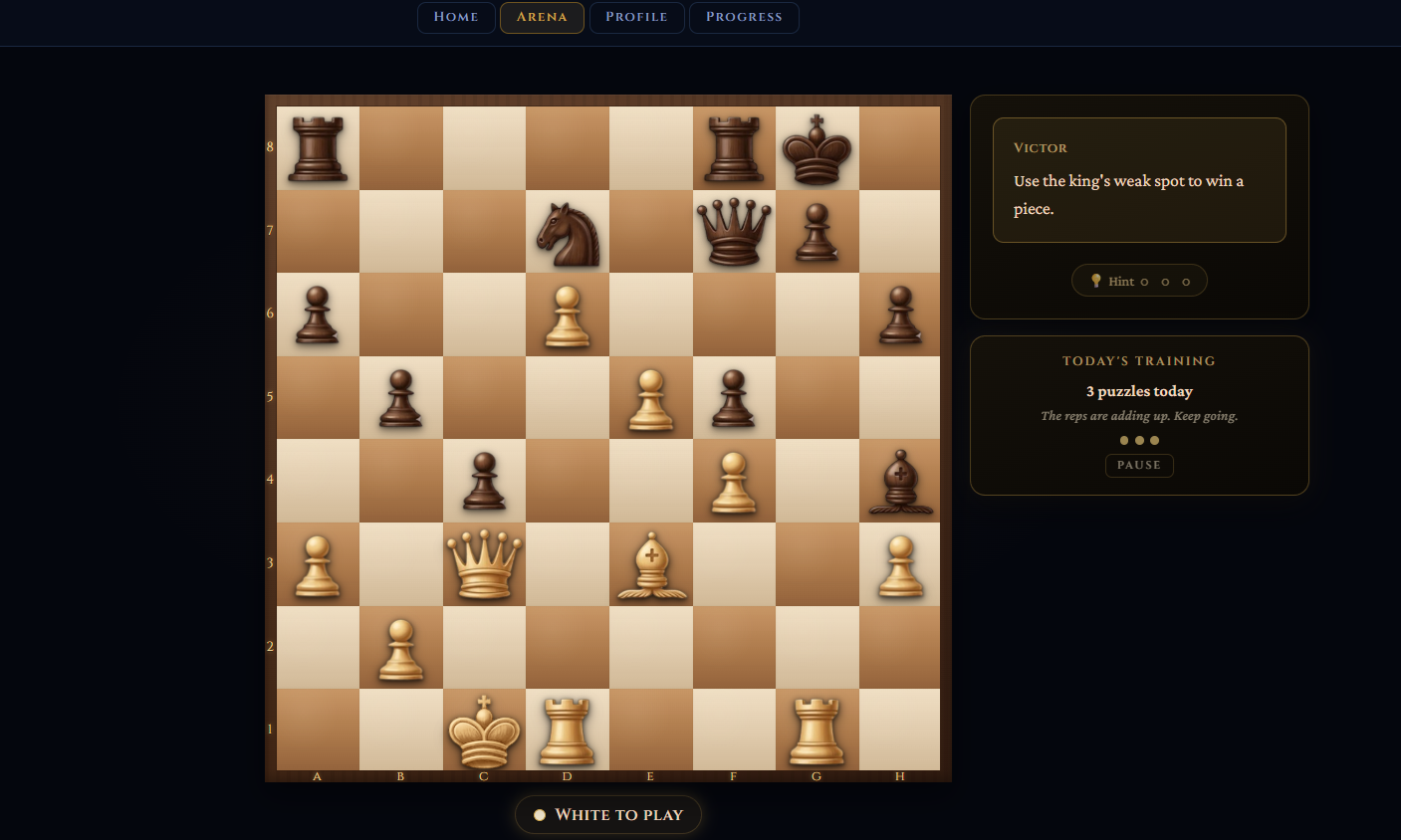
See today’s mission in action.
One position, Victor’s explanation, and the day’s progress.
What you see as a parent.
A short weekly email you can read in a minute. No chess knowledge needed.
Aanya
Guardian · Level 6
A sample report. Yours is built from your child’s own training, every week.
- Is my child training consistently?How many days they trained this week and this month.
- Which skills are improving?Where they are getting stronger over time.
- Where is more work needed?What is still shaky, and what the daily plan is working on now.
The habit shows up in the report
Training days earn a monthly status, Bronze to Platinum, by showing up, not by score.
We’ll email a real (anonymised) weekly report. No list, no follow-up.
A year of daily training for $199.99. About the cost of one private lesson.
7-day free trial. No credit card required. Learn more →
Before you start your trial.
Young players who already compete, or are about to. It suits children from about age 6 through teenage tournament players, and the training adapts to each child, so a beginner and a stronger junior both get the right level.